


Marc Copani: Becoming Muhammad Hassan, Cena's Last Match, Hulk Hogan, OVW
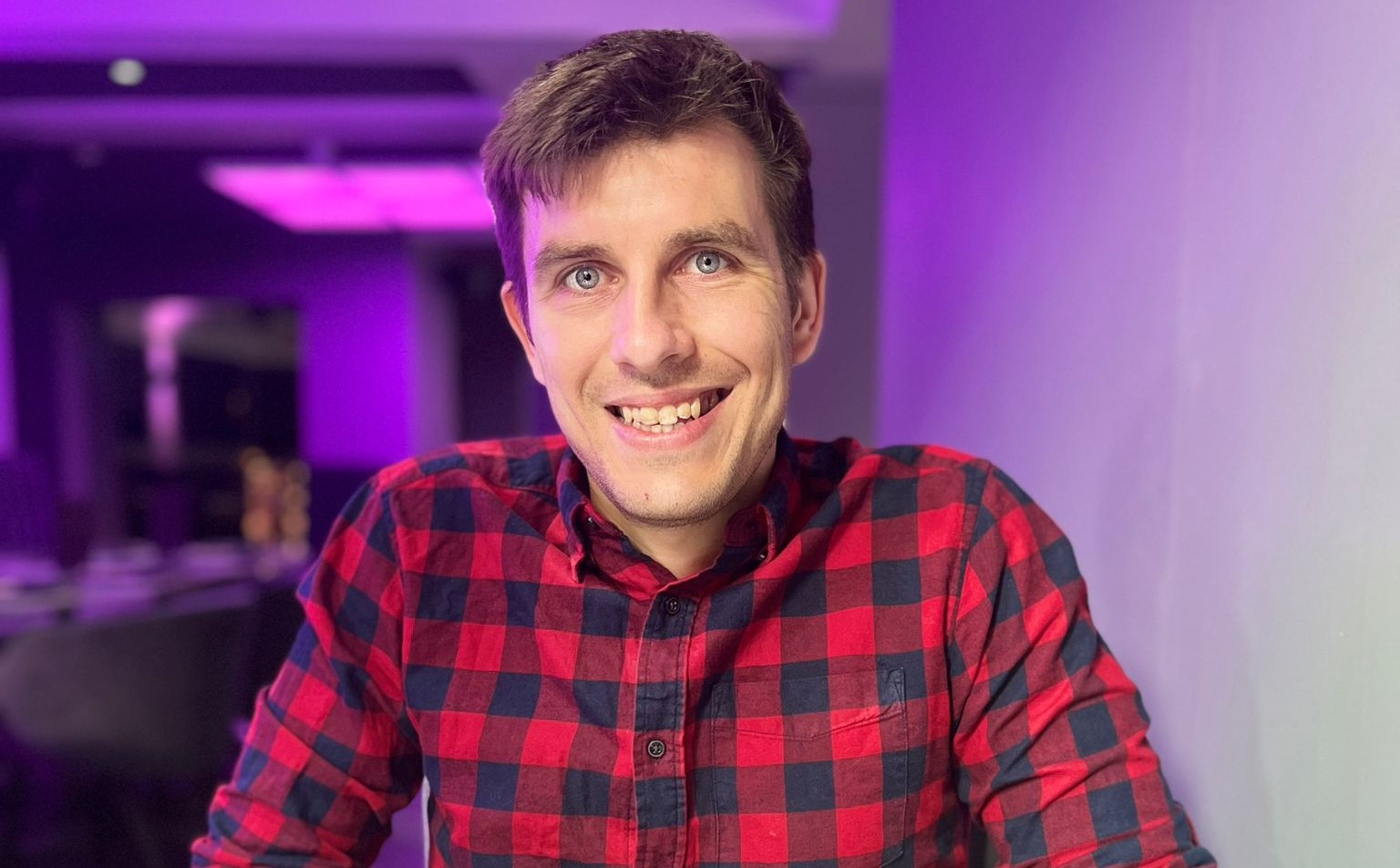
Portraying one of professional wrestling’s most infamous characters of all time, Marc Copani will always be known to fans for his time as Muhammad Hassan in WWE.
With the conflict in the Middle East being a major topic in the United States in the early 2000s, Muhammad Hassan was introduced as an Arab American who was tired of being stereotyped due to his race.
In the months that followed, Hassan had memorable moments with some of the biggest names in pro wrestling, such as The Rock, Steve Austin and Hulk Hogan. However, following a SmackDown segment that WWE have since attempted to erase from history, Copani saw his career come to a sudden end, and has not been seen on wrestling programming since.
On Wrestling Life, Copani joins Ben Veal to discuss his journey to WWE, how he found out that he would be portraying the Muhammad Hassan character, and how controversy led to the wrestler’s sudden exit from TV:
How Muhammad Hassan was created
The controversial SmackDown segment with The Undertaker and the backlash
A WrestleMania moment with Hulk Hogan
A possible babyface run
Training in Ohio Valley Wrestling (OVW) alongside John Cena and Dave Bautista
Plans for his 2026 memoir HEAT: The Rise and Fall of Muhammad Hassan
Marc Copani on the inception of the Muhammad Hassan character:
It’s not an exaggeration to say that the Muhammad Hassan character was one of the most controversial WWE personas in the 21st century, and possibly in company history. Speaking about the creation of the character, Copani noted that it definitely came from the mind of Vince McMahon:
“I think Vince had orchestrated the bigger pieces of it, and then it would be delegated to some of the writers that we worked with. You know, it was definitely a Vince McMahon idea, and then I think a lot of people kind of pitched in about the direction of the character. It’s kind of a team effort when you’re kind of writing that show and the storylines and how they develop with within the show and with other wrestlers.
But I felt like Vince was driving the enormity of that character. I don’t know if it was his idea to have me come out there with Mick [Foley] the first night, but I wouldn’t be shocked if it was his idea to come out there and or have me go out there and start insulting the troops, because he knew that that was going to be epic heat right away.”
On his WrestleMania moment with Hulk Hogan:
One of Copani’s biggest in-ring moments came at WrestleMania 21, which saw him on the receiving end of a beatdown from Hulk Hogan and he and Daivari attacked Eugene at the biggest sow of the year:
"It was such a whirlwind that day. We were in Los Angeles, knew we were going to work with Hulk Hogan. But the whole WrestleMania experience is so large. Normally you go in for a show, you're there for a night, to the next day. With WrestleMania, you're there, and you have the Hall of Fame, just a huge experience, it was overwhelming. Knowing that I had that part on the show, obviously really cool. But at the same time, it's like you're in there with Hulk Hogan, who is kind of making this big return, so to speak, and you don't want to mess any of that up either. But he was really cool, easy to work with. He was always a hero of mine. He was one of the people that got me into wrestling when I was much younger, obviously. He was awesome. They say don't meet your heroes. But I'm glad I got to meet him and have that experience in the ring with him, and more after that.
"But being in there with Eugene, with Nick Dinsmore, was awesome too, because it was kind of a full circle moment, and surreal to be looking across at Nick, who was the guy who was the first person I ever stepped foot in the ring with to show me how to take a normal flat back bump. And now here the both of us are playing characters that are very unlike who we are in real life, in Wrestlemania, about to have the biggest character in the history of the business come out. Surreal moment definitely highlights my life and one that I'll never forget. I'm really glad I got to meet Hulk Hogan. Controversy or not, my opinion of him was that he was always professional and great to work with and warm to me. I never felt any sort of heat or negativity coming from him."
On a possible WWE World Title run:
Following Hassan’s exit, reports stated that at one point there were plans to have him reign as the World Champion beginning with defeating Dave Batista for the title at Summerslam 2005:
"Yeah, and Cornette mentions that on Dark Side of the Ring. So I know it wasn't just me that heard that the idea was, obviously, to cheat heavily and beat the Undertaker, which, regardless of how you beat the Undertaker, you beat the Undertaker, that's huge. I think at that time, the way the character was generating heat from the crowd, putting a belt on the character really would have solidified his place, my place, as a main eventer. The idea was, Batista is billed from Washington, DC, and he's the hometown boy at SummerSlam. And the Arab not only beats the hometown boy who is also Dave Batista, but beats him in Washington, DC, the nation's capital, the country that he's been rallying against for the last year. I think that was the storyline."
"Obviously, it didn't work out that way. The funny thing is I lived in DC at the time too. Dave and I used to fly out together all the time, because we both would fly from the same airport. But that was what was supposed to happen, and obviously it never materialised that way.

On the controversial Smackdown segment with The Undertaker:
The most infamous moment of Copani’s career came in July 2005 when a controversial SmackDown segment aired the same day as the London bombings. The network that aired SmackDown, UPN, was hit with major backlash, which ultimately led to Hassan being removed from the show:
“I didn’t like the angle of Shawn being a martyr. I voiced that concern to the people who I thought I had to voice it to. But at the same time, we also had changed from Raw to SmackDown. Different set of standards and regulations for that program, but the character, what I always loved about the character was I always felt that what the character was saying, regardless what he was doing, was right. It was an American character that people used to chant USA, and it’s like, wait a minute, I’m from the USA. Then that character slowly started to transition to a character that was identifying more with Islam and his ethnic background, as opposed to the injustice that the Arab Americans felt."
"Do I think without the London bombing, the character had been pulled after that episode? No, I think the character would have went on. But eventually, either that character would have been pulled or it would have had to have changed drastically in order to survive after everything began to change in the United States and around the world. So yeah, I don’t think that the impact of the London bombing could be understated, because it really drew attention to what we were doing, and it really kind of made it look like we were taking advantage of real-life situations, which we were, but it hit way too close to home.”
On the backlash to the segment:
With Hassan and WWE being firmly thrust into mainstream media over the controversy, Copani was asked how it felt to be the subject of a national news story:
“At first it was scary to think that I’m national news, and it was also frustrating. It was scary to think that the character wasn’t going to continue. You started to [realise] that little by little, there isn’t much of an agenda for this character anymore, because I didn’t really know what to do about it. It was scary to think that this character was associated with real-life terrorism because you’re out there, day in and day out, not really thinking about the reality of what’s happening in the world. You’re thinking about what you’re doing in the ring and outside of the ring when you’re cutting promos and doing the vignettes backstage, kind of tying it all together to a real-life terrorist attack in which a lot of people lost their lives. It was kind of sobering and eye-opening. But as this heat progressed, it became scary for me to think that we’re just not going to be able to come back from that, and all of the what ifs, and ultimately, the way it ended, led to just massive heartbreak, to the point of denial and avoidance."
"It’s hard to really go back eventually, to where I was then, because it was so devastating. But to see the amount of press that it got, and to see the negative press that it got, and the fact that I was pulled off a TV, it was tough to sleep at night knowing that the writing was on the wall, that everything that I had worked for and everything that I had put in, and at that time, I felt like I was just hitting my stride.”
On the backstage reaction in the WWE locker room:
“I had a ton of heat backstage. At first, I didn’t have any heat anymore backstage, like I had been there long enough. I knew all the right guys. I knew everybody, I felt comfortable in the ring. I could get in the ring at a house show and build the navigate a match. I felt better about what I was doing on television. So I think that what really hit me hard is after really three or four years of struggling to learn how to wrestle, I was finally at a point where I felt more confident and comfortable in the ring than I ever have, where everything didn’t feel like it was in fast motion anymore. I can move moment to moment, adjust what I’m doing and be confident what I’m doing and who I’m doing it with, as opposed to, my first few matches, it’s like they’re a blur."
"You asked me what I remember about them. I can’t tell you much, because the adrenaline is so high that you’re just on autopilot, using muscle memory to get through, relying on the other guy to help it, because they always had a lot more experience. So I think that’s what really sucked to me, was knowing that that character wasn’t going to be around much longer, and finally, feeling comfortable being where I was, just to have it all kind of snatched away like that.”
On his family’s safety:
With the segment drawing heavy backlash, Copani was asked if he and his family felt safe and if they were also targeted:
“No, because I think once that hit the news, it really exposed the character. That was when they started saying I was an Italian American. No, that’s when it really exposed the character. It wasn’t about me, the character, about the WWE, putting that sort of content out there at the time insensitively. So I felt more heat before people really knew that I wasn’t even a native American. So no, not really like that."
"That’s what it was hitting on is this guy’s not even really Arab, and he’s out there doing all of these fanatical Muslim actions, and saying these things. The scary thing was, again, the amount of attention that it gained and really being compared in real life, and knowing that that was going to probably be the death of that character, literally, on TV.”
On a possible babyface run:
With Copani playing the heel throughout his run as Hassan, the former WWE star was asked how likely it could have been that he would have had a babyface run at some point:
“I suck as a babyface, so that wouldn’t have went over well, maybe it depends. It would take the right kind of situation. Do I think he could have become a different kind of heel? Yeah, but it’s tough when you’re getting that much heat to stop why you’re getting that much heat. If I had to continue without using the Arab American stuff anymore, I don’t know. I mean, you know, as a heel in OVW, I always got heat. I was always able to get heat.
Muhammad Hassan was kind of a vehicle to get nuclear heat. But it’s possible. I mean, I would never say anything is impossible in the wrestling business. That would have been a very interesting babyface turn to see Mohammed Hassan suddenly getting cheered and not booed.”
ABOUT THE AUTHOR
Alex Hunt is and has been a professional wrestling fan for over 20 years after getting hooked on WWE SmackDown every Saturday morning during the Ruthless Aggression Era.
Along with being the owner and writer for news and analysis website Features of Wrestling, Alex is also the transcriber and researcher for Chris Van Vliet. He previously worked for Inside The Ropes as the head writer and transcriber with more than 5,000 articles published, and was also on AEW media calls with Tony Khan.
When Alex isn’t writing about wrestling professionally, he spends the majority of his spare time running, playing guitar or watching F1 with his cat Ron.


