


Raven on Nevermore Documentary, ECW, Tommy Dreamer, Paul Heyman, WCW, Parkinson's Diagnosis
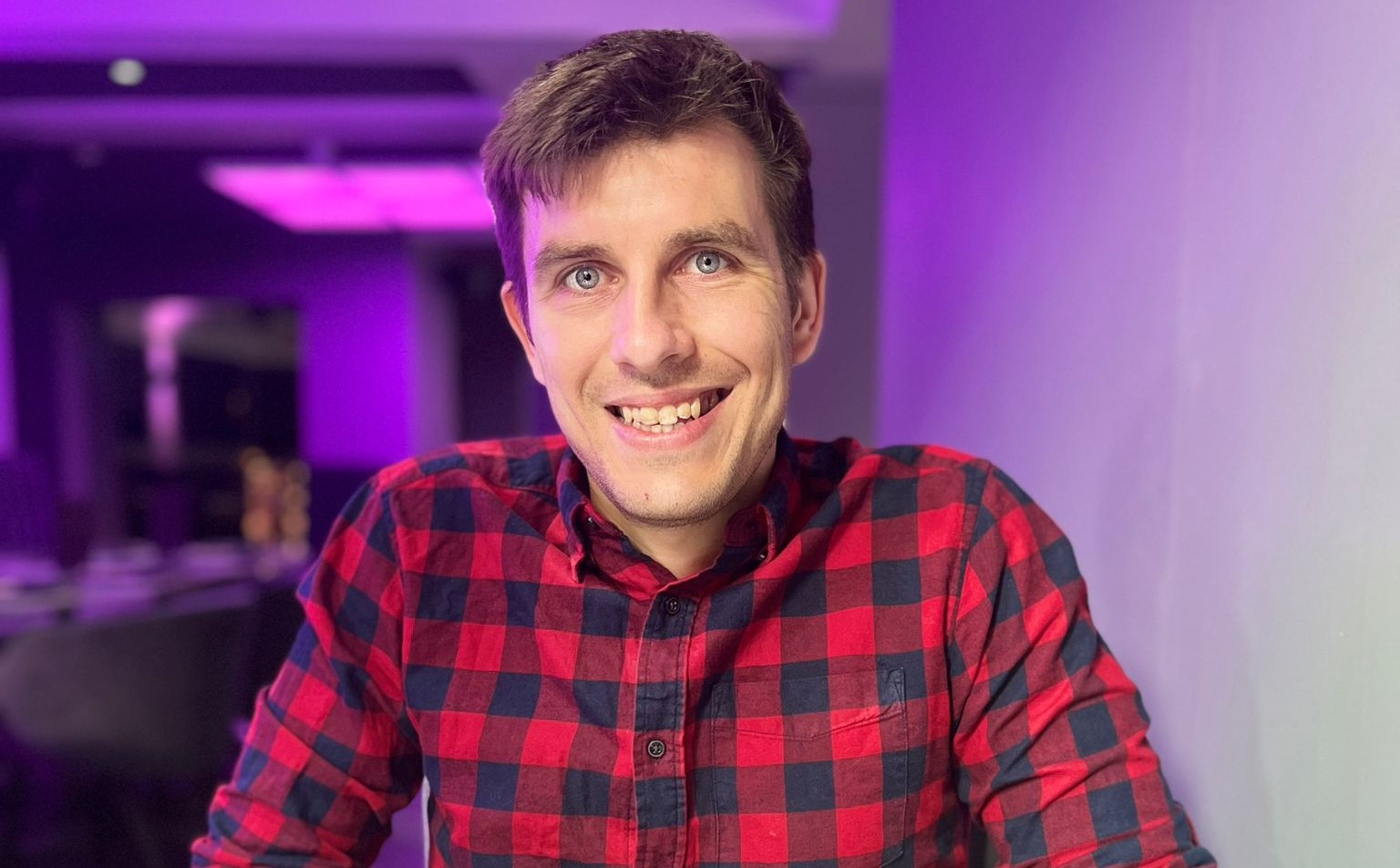
An icon of ECW, TNA Hall of Famer and a Wrestling Life 2026 Hall of Fame inductee, Raven has left a lasting legacy in the professional wrestling world.
While the man born Scott Levy has gone by many names in the squared circle, such as Scotty Flamingo, Scotty Body and Johnny Polo, it was his dark Raven persona that made him a favourite among the ECW fanbase. While Levy struggled in WCW and later in WWE, the man known as Raven thrived in the land of extreme, having historic feuds with Tommy Dreamer and The Sandman.
In 2025, the documentary Nevermore: The Raven Effect tells the story of the former ECW World Champion’s life and struggles in and out of the ring, with no stone left unturned.
On Wrestling Life, Raven joins Ben Veal to discuss the new documentary, his time in WCW, ECW and WWF, and the importance of mental health:
His new documentary Nevermore: The Raven Effect
The importance of therapy and mental health
His friendship with DDP
Why he did not find success in WCW
His favourite moment from WWF
Why ECW was revolutionary
Raven on the reaction to the Nevermore documentary:
Nevermore: The Raven Effect is out now on Amazon Prime and Apple TV and tells the uncensored story into the life and career of the legendary ECW wrestler, which has been well received by fans:
It's great to hear the reaction. They all love it. I mean, thank goodness. But it's not me. It's the director, Geordie Day, who did a phenomenal job. He was able to take my non-stop ramblings and make it into an organised, cohesive unit.
With the documentary going deep into Raven’s personal life as well as his professional life, the former ECW Champion admitted that he struggled to make it through:
"It took me about six weeks to watch the first rough cut. He made it and he sent it to me. I go alright, I'll watch it. Six weeks later, he calls me up and goes, ‘Have you watched it?’ I'm like, ‘I'll get to it.’ It's painful to watch. I asked for it to be painful. I said, Look, I want all the negativity. I want all the warts and all. I want people to see the real me, but also hopefully it'll explain me to make my friends understand me better, as well as people that don't know me, that are just fans. I've dealt with all the issues that I talked about on camera with the psychologist, I've been through therapy, and I'm cool with all the issues. But it's really been rough though, the six weeks going through it, watching the movie. I didn’t even watch the movie again.
The last time I watched was two years ago, the full draft, and that took me another three or four weeks to get around to watching. It's difficult because it's all your baggage played out for the world, and even though that's what I wanted, it still is very difficult, because it's seeing all the baggage, it's having the band aids ripped off over and over again, and stuff that was healed and didn't even need band aids, they're still being ripped off. So if I hadn't dealt with the issues, I don't think I'd be able to talk about it in this movie at all. If I hadn't dealt with the issues, I would really be in a mess, but that's part of the reason why I was happy to make the movie when Geordie suggested it, because I figured it could help people. It could explain from a selfish point of view, could explain me better. It also tells my highlights, as well as my lowlights. But also for people to watch it, it brings up mental illness and stuff. I've never shied away from talking about it, but it brings it back.
I don't want people to feel like they can't talk about their mental illnesses. I've always told people, I had a friend who needed therapy, but he didn't want to go. I'm like, Look, if you had a broken arm, would you put a cast on it? He goes, Yeah. I go, well, then if you have a broken brain, then you got to go see somebody to fix it. Sometimes that takes medication to fix it. Sometimes it takes just talking. But the cool thing about therapy is it's like Will and Grace. Will said on Will and Grace, ‘Going to therapy is great. It's like you're on a talk show and you're the only guest, and everybody's fascinated by what you have to say."
On his friendship with DDP:
Like many in the wrestling world, Raven owes a great debt to Diamond Dallas Page for helping him as a performer and as a friend:
"He's always been a friend. I mean, we've been friends going way back. I used to ride with him and Kevin Nash a lot of times back before I started riding with Pillman and Austin in WCW. Page also helped me, he pointed me in the right direction to go with my character, as I've said in the movie, creating the Raven character, although he likes to take more credit for it than he deserves. But he also got me my job with Paul E, so I can't bear any ill will about that.
Page has always been there as a resource and as a friend. If I ever needed him. If I needed him tomorrow, I could call him. I'm sure he'd be there, or he'd send a flunky; he helped me out with whatever it was I needed."

On iconic ECW rivalry with Tommy Dreamer:
Having a historic feud with Tommy Dreamer in ECW, Raven noted that one could not have existed without the other, and that they will likely feud until the very end:
"[Raven] needed Dreamer to get himself over. But then the Sandman thing afterwards, he was freed from Dreamer, but Dreamer was never really freed from him. But I've always made sure I come back to Dreamer in everything I do. Like in my TNA Hall of Fame induction, I still DDT’d him afterwards. We're going to be 80 years old sitting in wheelchairs and I'm going to be cutting the line that gives him his medication. But Raven and Dreamer are synonymous in the wrestling world."
On Extreme Championship Wrestling and Paul Heyman:
A true revolutionary promotion, ECW prided itself on being different from WCW and WWF, and its influence remains more than 20 years after the promotion closed down:
"It was revelatory. I'm repeating that, but it really was. It wasn't just hardcore. It was hardcore, it was matches with guys you'd never seen before, 150-pound Rey Mysterio and Juventud, blowing the place up. Pillman showed up for a while. It had music, there was culture, it was part of the culture.
Part of the Paul E secret was that he knew he always tapped into the cultural zeitgeist. That's the problem with most bookers, is they live in the bubble of wrestling, and so all they know is wrestling, and they don't know what goes on [in the real world. That's why wrestlers wore mullets 10 years after they were out of style, it's because they didn't know they went out of style. Because they don't hang out in the real world. They only hang out in the wrestling world. And so Paul E was smart enough to tap into that and play music that was trendy, make videos with trendy music."
On why he never got to the main event in WCW:
Although Raven was one of the top stars in the land of extreme, he was unable to achieve the same success in the more mainstream promotions:
"Bischoff didn’t get the character. We've talked about it. I did his podcast, but he just didn't get the character. Everybody's different. Nothing I can do about that."
On a standout WWF moment:
Although Raven did not achieve the success he expected in WWF, he was a standout performer in the hardcore division, and looked to do more than just matches filled with weapon shots. The 26-time Hardcore Champion recalled one match in particular that he very much enjoyed:
"The Backlash [2001] pay-per-view with Rhino, where he went to Gore me, he missed, and ended up in a shopping cart. I think that was one of the best hardcore matches ever, up to that point, at least. I can't say what's come since then, but up to that point, I would say it was the best hardcore match I can think of. Because my hardcore matches had psychology.
Most hardcore matches are just, I hit you, you hit me. Here's a pot, here's a pan. Mine were always I used all the weapons as props, to make it more creative, and I love doing the hardcore stuff because of that, because I hate that it was lumped into the sum of just garbage wrestling. But unfortunately, a lot of it was, most of it was. But I don't see why people stopped having psychology when they went to a hardcore match, I'll hit you, you hit me. Instead of saying babyface shines, heel gets heat and babyface makes come back. You tell the same psychological story you would tell in a regular match."
On his current health and battling Parkinson's:
Raven provided an update on his health, noting that he is living with Parkinson’s disease and a sleep disorder:
"I've had it for 10 years, off and on. I say off and on, even though that doesn't make any sense because I had a tremor for a couple of years, went to a neurologist, he said to try getting off the Depakote, a medication I was taking for sleeping, and maybe it'll go away, because it's known to cause it. So I got off it, and it went away for mostly for a couple years, but then the tremor started coming back. But other than that I have a small hitch in my walk. Mainly, it's just a tremor. It's not anything that is not manageable. So my sleep disorder is the worst part, because I wake up exhausted. I wake up as tired as when I went to bed, because I wake up 15-20 times a night. But on the plus side, at least I can fall back asleep, usually immediately. I'm always trying to look at the positive, you know? I try not to look at the negative."
At the end of the interview, Ben Veal let Raven know that he was one of the inductees into the Wrestling Life Hall of Fame for 2026, joining Demolition, Al Snow, Doug Williams and Angelina Love as part of next year’s class.
ABOUT THE AUTHOR
Alex Hunt is and has been a professional wrestling fan for over 20 years after getting hooked on WWE SmackDown every Saturday morning during the Ruthless Aggression Era.
Along with being the owner and writer for news and analysis website Features of Wrestling, Alex is also the transcriber and researcher for Chris Van Vliet. He previously worked for Inside The Ropes as the head writer and transcriber with more than 5,000 articles published, and was also on AEW media calls with Tony Khan.
When Alex isn’t writing about wrestling professionally, he spends the majority of his spare time running, playing guitar or watching F1 with his cat Ron.


